Effective handover notes are the foundation of continuity and safety in 24-hour disability support. When overnight or weekend staff finish a shift, they must pass on clear, up-to-date information so daytime teams know what happened. A thorough shift handover safeguards participants and meets NDIS documentation standards. It ensures that nothing crucial – from a change in medication use to an unresolved incident – falls through the cracks between shifts. In practice, each support house or service should have a consistent handover process or checklist. This article explains what to include in an overnight‑to‑morning handover for NDIS providers, with practical tips and examples.
“Shift notes are an operational handover document recording what happened during a shift, including tasks completed, times, anything unusual, and what the next worker needs to know.” – Penny Halpin, NDIS auditor.
A good shift handover ensures the next team starts with the full picture: who was on shift, how participants were, what supports were given or missed, and any alerts or tasks pending. It bridges home routines and provider delivery, helping providers keep each person safe and well supported. For example, one industry checklist notes that handover records are evidence of “continuity of support” – exactly what auditors look for under the NDIS Practice Standards. In other words, writing useful handover notes is not optional – it’s integral to compliance and quality care.
Why Comprehensive Handover Matters
Continuity is a core NDIS requirement. Participants expect consistent care, even when a different set of staff works at night. From a compliance standpoint, the NDIS Practice Standards expect each provider to keep participant information “identifiable, accurately recorded, [and] current”. In practical terms, day-to-day handovers are part of that documentation. For example, a recent guide for Supported Independent Living (SIL) providers explicitly lists “daily/shift handover records demonstrating continuity of support” as required evidence. In effect, every overnight support log or handover note you write becomes part of the participant’s official record. If something serious happened overnight, those notes may even fall under reportable incident rules (which require records be kept for at least 7 years).
Beyond compliance, strong handovers improve safety. A clear, factual handover note gives the incoming staff the same situation awareness the outgoing staff had. It means any emerging risks (health changes, behaviours of concern, etc.) and actions taken are not forgotten. Handover gaps contribute to “rushed or incomplete shift notes” and “continuity of care” problems. By contrast, good handovers mean staff trust the process, family concerns are addressed promptly, and even emergencies are handled smoothly – day or night. As one SIL provider wrote, good handovers result in “safer support from the first shift, fewer medication and routine errors, [and] clearer expectations for families and providers”.
In summary, a quality handover keeps participants safe, reduces stress for families and workers, and provides a clear audit trail of support. For an NDIS provider, every overnight call or event should be captured in writing and communicated to the day team. In practice, that means at the very least logging the key details below before a shift ends.
Shift Notes vs Progress Notes
First, it helps to distinguish shift (handover) notes from progress notes – both are documentation, but they serve different purposes. Shift notes (or handover notes) are written at the end of each support shift. They are an operational handover tool: recording what happened during the shift and what the next staff member needs to know. In contrast, progress notes track a participant’s progress against their goals and are often tied to support plans. A published guide clarifies: “Shift notes are an operational handover document recording what happened during a shift… and what the next worker needs to know. Progress notes record movement against the participant’s goals and support plan.”.
In other words, when a night support worker finishes, they write a shift handover to tell tomorrow’s team about the evening. If the day team needs more detail for therapy or plan reviews, they might rely on progress notes. But for handovers, we focus on the immediate facts. The goal is clear, concise information – not elaborate narratives. Use of simple headings or bullet points (see the checklist below) can keep handover notes structured and easy to scan.
Importantly, a good handover note should still be written promptly and factually. The NDIS guidelines stress that notes be completed “as soon as practicable” (ideally during the shift) to ensure accuracy. Avoid vague entries like “all good” or “usual shift” – as one expert puts it, these tell the next worker almost nothing. Instead, record what you actually saw, did, or heard in objective terms. For example, instead of “dinner okay”, write “Ate half dinner, refused dessert, drank 1L water”. These specifics become vital clues for the incoming team.
In practice, an effective handover combines the essential content below with timely completion. Before writing the note, quickly review what’s expected: client details, status changes, any incidents, tasks outstanding, and plans for next shift. This ensures you don’t have to reconstruct from memory later. As CaresLink’s template summary notes, handover forms should be filled “at the end of a shift, after a change in worker, or when important information must be passed on”.
Essential Handover Checklist Items
A structured checklist helps make handovers reliable. Below is a practical handover checklist you can adapt for your teams. Use it as a guide to make sure no key category is missed. (You might even convert this into a simple form or template for staff to fill out at each shift end.) Not every item will be relevant every time, but “no concerns” or “none” is a valid entry – it tells the next shift that it was checked. The consistency of format means incoming staff never have to hunt for information; they always know where to look.
-
Shift and Participant Identification: Note the participant’s name, date, shift times, and who wrote the note. Include the worker(s) on this shift and the worker(s) taking over. (Having initials or full names adds accountability.) For example: “Participant: Sam K. | Date: 10/09/2026 | Shift: 10pm–6am | Workers: Jane D. & Luke M.”. This basic header anchors the handover to a specific person and time.
-
Client Presentation & Wellbeing: Briefly describe how the participant appeared and felt during the shift. Was their mood calm, anxious, drowsy, agitated? Mention any changes in their usual demeanour. Example: “Mood: Cheerful after evening call with family; became tearful at 2am due to leg pain.” Avoid labels like “aggressive” – instead note exactly what was seen (e.g. “raised voice and threw TV remote”). Also note general wellbeing: did they sleep well or have trouble sleeping? Any pain, illness symptoms or discomfort? This clues the day team into immediate health or emotional trends.
-
Health and Personal Care: Record any medical or care-related observations. This includes vital-sign changes (e.g. high temperature, blood sugar levels), symptoms (nausea, vomiting, headaches), or other health events. Did the participant eat and drink as usual? Were they toileted normally? For instance: “Hydration/Appetite: Drank ~800mL water overnight; refused breakfast.” Mention any wounds, rashes, or skin issues observed. Also include changes in functional needs: mobility issues, use of mobility aids, or falls. If the person has private nursing or is on an oxygen pump, note anything unusual (e.g. “Oxygen set to 2L/min all night; no desats noted.”).
-
Medication Administration: Clearly note all medications given or missed. Include dose times and any variations (late doses, additional PRN meds, etc.). E.g. “All meds given as charted; 8pm analgesic was 15 min late (in shower).” If any medication was refused or vomited, specify what and why (“Refused night-time anti-emetic; took oral med instead.”). Mention any PRN (as-needed) drugs used and why (“Gave PRN Diazepam 5mg at 3am after yelling episodes.”). Also note if there were any errors (e.g. “1st dose of insulin given, staff realised it was wrong strength; changed to correct dose and documented Incident #45.” – with follow-up action taken). Accurate medication notes are critical to avoid duplication or missed doses. Remember to follow your policy for reporting medication incidents; but even if you submit an incident form, mention the event in the handover.
-
Incidents & Behaviours: Document any incidents or unusual events that occurred. This could include falls, injuries, elopements (missing person), aggressive behaviour, property damage, or near-misses. Write what happened, who was involved, and what response was taken. Use objective language: instead of “he was being difficult”, write “Participant stood up and knocked over wheelchair at 4am during waking.”. If the incident was a “reportable incident” (serious injury, unauthorised restrictive practice, etc.), note that here and ensure your incident management process is followed. Also list any behaviours of concern (even if not classed as incidents). For each, say whether behaviour support strategies were used or if a clinician was called. Tip: per NDIS coaching advice, build behaviour documentation into your handover checklist so no incident is “inadvertently missed”.
-
Family or External Contacts: Note any calls or visits from families, guardians or outside professionals. Did a family member ring with concerns or bring something (like medication or paperwork)? Was the GP, hospital, or police contacted? For example: “Mother phoned at 1am worried about tomorrow’s transport; message given to day coordinator.” Or “Emergency services paged at 3:30am – panic attack; paramedics attended, released on scene.” Also mention any sign-offs of authorisations or paperwork received overnight. Including this shows the incoming team what has already been communicated and what follow-ups might be expected.
-
Unresolved Tasks / Follow-Ups: Record any pending actions. This could be tasks the night staff couldn’t finish (e.g. “Need to book maintenance for broken AC”), items to check (e.g. “Check John’s wound on Tuesday morning”), or things the client requested (e.g. “Participant asked to call OT about pressure mat.”). Essentially, “what the next team needs to do” or keep an eye on. Even if a task was partially done, note the status (“X was weighed, weights charted; hearing aid battery to change next shift.”).
-
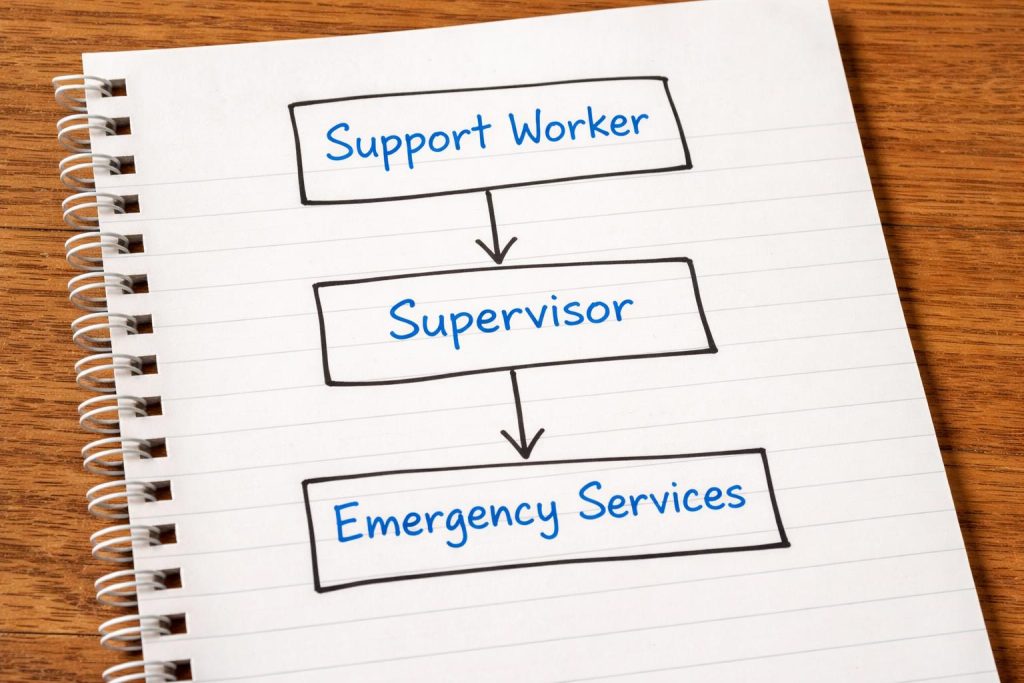
Escalations and Support: If any after-hours escalation occurred, detail it. For instance, clinical escalations: “Called on-call RN at 2am for high fever; nurse advised give Paracetamol PRN.” Or “Manager X was informed about 4am call-off.” Record who was notified and what guidance was given. Also note any emergency calls (e.g. 000 calls for urgent health or police for a missing person). For example: “No phone signal in building – escalated to 000 at 5:30am for police check on no-show.” This ensures the day team knows the chain of events and can catch up on any missed steps. (See also Incident Reporting section below for requirements.)
-
Missed Shifts or Staffing Issues: If the roster changed unexpectedly, note it here. Did a worker call off or arrive late? Was a support worker replaced mid-shift? This is important for accountability and payroll, and may affect the morning team. Example: “Shift of Luke M. ended at 4am; Jane D. covered remaining 2hrs unexpectedly after Luke fell ill.” Also note if any double-ups happened (two staff for high-support clients, etc.) or if there was a period without staff and how it was managed.
-
Environmental or Equipment Notes: Record any relevant house or equipment issues. For example, “Smoke alarm briefly triggered at 3:10am (burnt toast); reset OK.” Or “New fridge lock installed.” Mention if essential supplies ran low (incontinence pads, medications stock). Even minor facility problems (light bulbs out, keys lost) should be noted so day maintenance or logistics teams can follow up.
-
General Observations / Team Communication: Include anything else that affects the participant’s care. For example, changes to routines (“Dinner time was 30 minutes late due to being at hospital.”), changes in transport plans, or unusual refusals (“Participant refused shower for third night – day RN to assess skin”). Also note how the participant was supported (list key activities or techniques used, like “listened to music when agitated”, “used firm tone for compliance”). This helps maintain person-centered care strategies.
Below is an example handover template you might use as a starting point; you can copy and customise it for your service. These fields align with the items above and are drawn from industry examples:
Staff Handover Template (fill in each section for the shift just completed)
- Client Name: __________ Date: ________ Shift: ____ to ____ Worker(s): _______
- Client Presentation: (mood, behaviour, sleep, appetite, pain, etc.)
- Tasks Completed: (supports delivered – e.g. outings, appointments, therapies)
- Medication: (all doses given as charted? Any delays, refusals, or PRNs? List details.)
- Meals & Fluids: (what they ate/drank; any refusals or concerns)
- Health Observations: (new symptoms, injuries, hospital visits)
- Incidents/Behaviours: (fall, aggression, elopement; link to any reports)
- Family/Contact: (calls or visits; who contacted and why)
- Outstanding Tasks: (appointments tomorrow, follow-ups, repairs needed)
- Concerns & Escalations: (clinician called? paramedics? risk issues)
- Next-Shift Plan: (what incoming staff should do or monitor)
- Equipment/Supplies: (maintenance issues; low stock)
Each bullet above can be a sub-section in your own documentation system. The CaresLink handover form (cited below) suggests a very similar structure. The key is consistency: use the same headings every time so staff know exactly where to record each type of info.
Writing Tips and Best Practices
-
Be factual and concise. Stick to observations, actions, and outcomes. For instance, rather than “He was very agitated tonight.”, write “Participant yelled and paced from 1–1:30am when staff asked to use the shower; calmed after listening to music.” The incoming team then knows exactly what happened, when, and what worked to settle him.
-
Include times where possible. Use time stamps (e.g. “at 4:10am”) for any significant events: medication given, doctor called, changed pulse rate, etc. This helps track timelines and meets NDIS expectations for accuracy.
-
Avoid jargon or vague language. Describe exactly what you saw or did. If English is a second language for staff, short clear sentences are better than complex ones. Example: say “passed meal tray at 7:15pm” instead of “gave dinner”.
-
Write during the shift, not after. Complete your handover note before leaving or at shift handover, while details are fresh. Delaying documentation risks missing details and violates the requirement that notes be written “as soon as practicable”.
-
Document even “no issues.” If a category had nothing notable, write that explicitly. For example: “No incidents or falls tonight.” This shows the check was done. Blank gaps or copy-pasting “same as yesterday” can lead to audit findings or missed information.
-
Use proper records systems. Whether you handwrite notes or use an electronic care plan system, ensure each entry is dated, timed, and signed (or digitally recorded) by the staff member. The NDIS requires records to be kept and auditable, and a signature ties responsibility to the note.
-
Follow up urgent items. If an overnight issue needs immediate attention (e.g. a participant’s health deteriorated), highlight it so it’s actioned. Flag it verbally as well (“verbally handed over: monitor blood sugar this morning”). Remember: “If there was a reportable incident, follow your provider’s incident process as well as noting it”.
In short, treat your handover notes as official records: write them respectfully and completely, knowing that participants or auditors may read them later. Good handovers mean a participant’s care doesn’t skip a beat.
Incident Reporting and Handover
Some overnight events may cross into formal incident reporting territory. Under the NDIS (Incident Management and Reportable Incidents) Rules, any serious incident or any incident resulting in harm must be reported to the NDIS Commission within the required timeframes (often 24 hours). Your handover note should still describe the incident, even if you also submit an official report. In fact, it’s good practice to note the incident report number in the handover for reference.
For example, if a participant falls at 3am with an injury, the staff might activate the incident procedure (first aid, notify nurse, call ambulance if needed) and then, once secure, write in the handover: “2am: participant stood up unassisted and fell in bedroom; twisted ankle. First aid (ice pack) given. Incident report #57 filed online.” This gives daytime staff full context. Remember also to log minor incidents or near-misses (like bruises found) even if they’re not reportable – they go in your incident register. If nothing else, handover notes themselves become part of the incident record (and must be kept for 7 years).
In any escalation (calling 000, nurse on call, etc.), document who you spoke to and the advice given. After Hours Response’s model is that every after-hours call or incident is triaged by a registered nurse and “lands in your morning handover”. In practical terms, that means if your provider uses an after-hours service, that service should supply a written summary of any incident they handled overnight. If you manage on your own, ensure your own staff do this.
How After Hours Response Can Help
After Hours Response specialises in overnight and weekend support for NDIS providers. When your staff have a query or an incident after hours, our team answers with real people (including Registered Nurses on call) who log every detail. Crucially, we provide a structured morning handover. Every event – from a shift call-off to a clinical concern – is recorded with timestamps and included in our handover report. This means your daytime managers wake up to a clear file, not a pile of unanswered questions.
For example, imagine a support worker had to call 4am to arrange emergency cover. After Hours Response would update your roster on the spot and log the call. Our system would then include an entry like: “3:45am – Worker call-off received; shift covered by backup worker X; roster updated in system.” If a participant refused a key medication at night, our RN would note it and add: “Participant refused 10pm dose of [medication] due to nausea; instructed to try again at 6am.” This live documentation becomes part of the official handover sent to you.
In short, we ensure no detail is lost. Our service is not just an answering desk – we’re an extension of your team. You get an audit-ready handover document every morning, aligned with NDIS standards. As one client review put it: “They logged the roster gap, escalated the incident, and had the full handover ready by the morning” (sharing on social). After Hours Response can tailor that handover to your needs – whether that means structured handover forms, daily email summaries, or direct uploads into your quality system.
Next Steps
Good handovers are a team effort: they require clear procedures, trained staff, and a culture of accountability. As a practical takeaway, consider creating a written Handover Policy or Procedure (if you don’t have one) that defines exactly who writes the note, when, and what format to use. Train all shifts to use it. Provide new staff with the template (like above) during induction so they know what information to record. Review your handover records regularly for completeness – auditors often find “handover book but not in system” gaps, so make sure these notes feed into your overall quality documents.
Finally, remember that asking for help is an option. If you’re not sure your handover practices meet NDIS standards, or if you want to streamline your after-hours system, After Hours Response is here to assist. We have extensive experience working with SIL providers and other high-support environments, so we know exactly what information needs passing on. We also understand the NDIS Commission’s expectations – our service is designed to create audit-friendly, Commission-aligned handovers.
Get in touch today to discuss how we can support your team. Our experts can review your current shift handover process, suggest improvements, or even help implement digital tools and templates. With After Hours Response handling your after-hours calls and notes, you’ll never have to wonder what happened overnight – you’ll have it all in writing, ready for action.
Contact After Hours Response for a consultation or more information on after-hours support and handover best practices. Let us help you maintain seamless continuity of care and strong NDIS compliance, day in and day out.