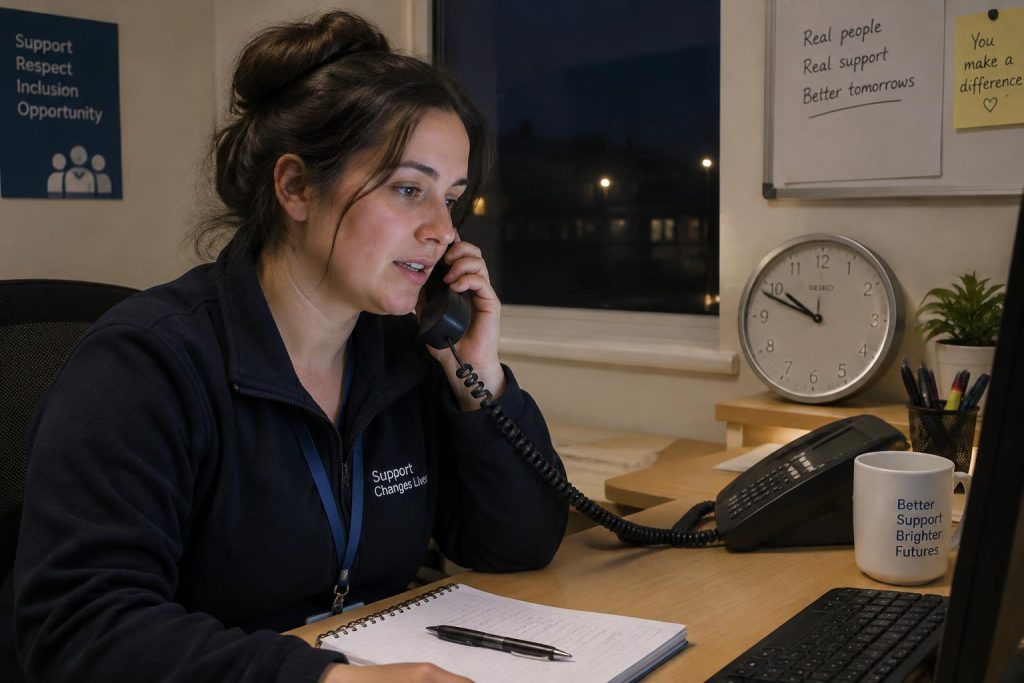
When an NDIS support worker calls in sick or cancels at the last minute, especially overnight or early morning, providers must act quickly to maintain participant support. A story from After Hours Response illustrates the stakes: “A support worker calls in sick at 5.30 am for a shift starting at 7 am… The participant needs assistance with their morning routine and cannot simply wait until the office opens”. This scenario is more than an inconvenience — an unfilled night or morning shift can disrupt personal care, medication support or critical supervision.
The NDIS Practice Standards treat this as a continuity-of-support issue. Under the core module, providers must “manage day-to-day operations in a way that avoids disruption” and ensure that if a worker is absent or a position is vacant, a suitably qualified person steps in. In short, support should continue or alternative arrangements explained and agreed with the participant. When a worker unexpectedly cancels after hours, providers must immediately mobilise resources to fill the gap and protect participant well-being.
After Hours Response (AHR) is built for this purpose. Our 24/7 operations desk works off your roster and escalation protocols to handle sick calls, no-shows and cancellations overnight. We contact potential replacement staff, communicate with participants or families if needed, document every step and give your daytime team a clear handover by morning. In practice, this means urgent roster issues are “actioned during the period in which they occur” rather than left until the next day.
Let’s explore the practical steps to manage after-hours staff absences, with tips on replacements, prioritisation, communication and compliance – and how expert after-hours support can help.
Act Fast When a Worker Cancels or No-Shows
When you learn of a last-minute cancellation or no-show, time is of the essence. A rapid, structured response can prevent an issue from escalating into a crisis.
- Gather all details immediately. Note who called out or no-showed, for which participant, and why. Clarify when the worker noticed (e.g. at 5 am vs hours before the shift). This information helps assess urgency and possible replacements.
- Escalate to your on-call person or team. If your organisation has an on-call manager or roster coordinator, alert them right away. If you use an outsourced desk like After Hours Response, they pick up the phone instantly (average answer time <20 sec) and begin managing the situation. AHR’s action-focused approach means “calls [are] handled, incidents escalated, roster gaps closed in real time — not logged and left for morning”. In other words, the fallback isn’t voicemail; it’s active problem-solving.
-
Activate your replacement process. Immediately use your pre-defined procedure for coverage (see below). Common steps include attempting to reassign the shift or contacting any on-call or casual staff. An outsourced provider like AHR will follow your business rules and call-out order to find replacements and update your team. For example, AHR’s 24/7 team “can work from an organisation’s roster, call-out list and agreed business rules” to contact backup staff or agencies.
-
Log every action. From the moment you learn of the cancellation, document calls made, staff contacted, and any interim arrangements. This record will be part of your morning handover and, if something goes wrong, your incident reporting. As CarerMarket notes, timely shift notes and incident reports are crucial: “Follow your usual reporting procedures when something goes wrong… [they] support your records and never replace your legal reporting duties”.
By treating the cancellation call as a high-priority event (not just a message), you set the stage for the next steps: finding cover and keeping participants safe.
Finding Replacement Staff After Hours
With one staff member out unexpectedly, the challenge is to get another qualified person to cover the shift — even in the middle of the night.
-
Check internal resources first. If you have any standby or relief staff, contact them immediately. Many providers maintain an on-call “casual pool” who agree to fill last-minute shifts. Also consider other teams that overlap (perhaps in a different home) who might have staff available.
-
Use approved agencies or rosters. If no internal staff are free, it’s common to use an agency or external roster support. As one provider notes, dedicated rostering services “assist with shift changes, cancellations, replacements and unfilled shifts”. For example, NDIS rostering support services can take over the task of calling all available casuals or agency pools to find a suitable worker. This keeps your in-house team focused on participants instead of phones.
-
Post the shift to a platform if appropriate. Some organisations use workforce-matching tools or boards. After a cancellation, “post the vacant shift right away” with all details – support needs, times, location – so any available qualified worker can step up quickly. Clear, detailed shift postings (support type, skills required, urgent care notes) are recommended to attract the right fit fast.
-
Bring the participant into planning if needed. In emergencies (especially for SIL supports), it may be necessary to temporarily change the plan. For example, if no live-in carer is available for a silent sleepover, consider an approved emergency arrangement (like waking night staff or family involvement) and document it. Any alternate support must comply with the service agreement and be communicated to the participant or their guardian.
After Hours Response leverages all these methods on your behalf. Our team can cross-check your call-out list, contact ranked candidates, liaise with recruitment agencies, and even open shifts on approved platforms or internal systems. We focus on the participant and service requirements, not just “finding anybody.” As AHR puts it: effective roster management “is not about finding anybody who is willing to take a shift. It is about having an organised, participant-focused and employment-compliant process” to decide urgency, confirm coverage, and inform stakeholders.
Prioritise Essential Supports
Not all cancelled shifts carry the same risk. When a shortage occurs, first ask: what is the participant’s immediate need? The NDIS Practice Standards emphasise proportionality: interruptions are more critical for high-intensity or essential supports.
- Urgent activities of daily living. Personal care, medication administration, transfers and mobility assistance, or supervision for high-risk behaviours must be covered. If your absent staff were slated for these tasks, find a qualified replacement immediately. Even a few hours without toilet assistance or medication can be dangerous for some participants.
- Behaviour support or clinical monitoring. If a participant has a behaviour support plan or health needs (e.g. diabetes care), a trained replacement is vital. A shift might require a worker with specific skills (e.g. First Aid, manual handling, behaviour support accreditation). A quick “fill” by an underqualified person could violate support agreements.
- Non-urgent activities. Tasks like a planned community outing or general household chores, while important for quality of life, can sometimes be rescheduled or handled later if necessary. For example, the blog example contrasts two cases: a cancelled non-urgent afternoon outing (that can be safely postponed) versus a cancelled overnight support or morning routine (which may require immediate action). Your response should reflect this difference.
Be transparent with participants and families. For high-need cases, explain the staffing hiccup and any contingency (e.g. who will cover, or a revised timeline). This reassurance is part of duty of care. As AHR notes, if an interruption cannot be avoided, “alternative arrangements must be explained and agreed with the participant”.
In the heat of the moment, use a simple triage: critical (life/safety), important (quality-of-life), then optional. Ensure the critical supports are always met. Sometimes this means asking a capable participant or family member to assist until help arrives (with proper risk assessment).
Communicate Clearly with Participants and Staff
Open communication reduces confusion and frustration when staffing changes occur.
- Notify the participant (or guardians) if needed. As soon as a cancellation is confirmed, inform them of any impact. For example: “Our worker won’t make it tonight, but we have arranged XYZ to assist you.” This shows respect and helps them plan (e.g. asking a family member to step in). Clear communication is also a compliance plus: it demonstrates transparency and person-centred care.
- Brief the incoming staff. If a replacement worker is found, give them all necessary handovers: participant’s routines, medication schedules, behaviour support plans, etc. After Hours Response ensures complete handovers by morning so no detail is lost overnight. Even if you cover internally, consider a quick handover call or notes to the new shift worker.
- Involve your on-call managers for high-risk issues. If a support worker’s absence exposes a participant to serious risk (for example, a participant who sleeps badly without a night carer), escalate immediately to senior staff or RN on-call. Our specialist desk includes Registered Nurses who can step into clinical questions and advise safely.
Overall, keeping everyone informed builds confidence. Participants feel safer knowing someone is working on their behalf, and staff can prepare to step in effectively.
Coordinate Emergency Coverage
Sometimes your internal resources won’t be enough, especially on weekends or public holidays. Have a clear plan:
- Use after-hours partners or call centres. After Hours Response provides an immediate after-hours contact point — real people, not voicemail. When internal staff aren’t available, our team will “handle your incidents, sick-calls and rosters while you sleep — and document it all to Commission standards by morning”. This 24/7 operations desk coordinates emergency coverage without waking up your leaders.
- Automate notifications. Ensure your roster system (or even a simple SMS group) alerts multiple managers when a night shift falls uncovered. Some providers use roster apps that automatically notify a backup list if a shift isn’t confirmed. These tools can “automate shift notifications” and reduce manual chasing.
- Develop mutual aid agreements. With enough notice, some providers arrange backup support with neighbouring organisations. In genuine emergencies, sharing resources can keep participants safe.
- Plan for key events. If a major incident occurs (e.g. a storm affecting power), have a disaster response plan that covers staffing. AHR has guidance on NDIS emergency planning which emphasises having a “prepared after-hours response plan” for any disaster.
By having multiple layers — internal call-out, agencies, technology alerts, and outsource partners — you reduce the risk that any overnight call-out goes unanswered.
Document All Changes and Incidents
Every call, handover and contingency must be recorded. Thorough documentation protects participants and providers alike.
- Log shift changes in real time. Use your digital roster or paper log to note cancellations, who was called, and who finally covered. This ensures anyone reviewing the roster (or an audit) sees exactly what happened.
- Complete incident reports if needed. If a shift gap contributed to any untoward event (e.g. a participant’s health issue or distress), follow your incident reporting procedures. Remember that some events (serious injury, abuse, etc.) must be reported to the NDIS Commission within 24 hours. Even if the no-show itself isn’t a “reportable incident,” any harm that results should be documented and notified appropriately.
- Keep participant records up to date. Document any deviation from the usual plan (e.g. “staff replacement acted under guidance of RN, all tasks completed”). According to one guide, clear records of what happened and when are essential: “Missing records make shift reviews hard. Write down events clearly, factually, and on time”.
After Hours Response ensures that by 9 am, your team has a full handover report. This includes every call outcome, actions taken and any outstanding issues. In other words, the new shift starts already caught up, and compliance is maintained. Regularly reviewing these records can also reveal patterns (e.g. chronic no-shows) that you can address proactively.
Leveraging NDIS Rostering Support
Managing last-minute absences is just one part of effective rostering. Investing in good systems and support pays off:
- Use digital rostering tools. Modern workforce management platforms help you automate scheduling, track who is available in real time, and alert you to gaps. As one industry guide notes, manual processes “can contribute to missed shifts… and compliance gaps,” whereas digital rostering systems improve visibility and reduce errors. Many platforms offer mobile apps where workers confirm shifts, so you can see in real time if someone declines or doesn’t check in.
- Audit your rostering process. Regularly check: Do you have enough casuals or relief staff on your call list? Are on-call arrangements clear? Do staff understand when to call out or report a no-show? Training and drills can make sure the team is ready to execute the plan.
- Consider partial outsourcing or hybrid models. Some organisations keep high-level oversight internally but outsource routine monitoring. For example, you might still have an on-call manager, but the outsourced desk pre-screens calls and only escalates truly difficult cases. This “hybrid” approach maintains control while reducing overnight workload.
Crucially, After Hours Response can be your partner in improving rostering support. We’re not just a call-answering service; we actively coordinate replacements and document everything. Providers who use AHR often wake up “to a clean handover — and the Commission paperwork is already done,” according to a satisfied operations manager. By leveraging our specialised after-hours team, your staff can focus on delivering care during the day, rather than spending nights scrambling.
How to Build a Reliable Backup Staffing Plan for Unexpected NDIS Shift Cancellations
One of the most effective ways to manage last-minute support worker cancellations is to prepare backup staffing arrangements before a problem occurs.
Many NDIS providers focus on filling their regular rosters but give less attention to what happens when a scheduled worker becomes unexpectedly unavailable. Although a roster may appear complete several days in advance, sick leave, transport problems, family emergencies and unforeseen circumstances can create gaps at short notice.
A structured backup staffing plan helps reduce uncertainty and gives roster coordinators clear instructions when an unexpected cancellation occurs.
Create a reliable pool of replacement workers
A backup staffing pool should include employees who have confirmed their willingness to accept additional shifts when available.
Rather than maintaining a general contact list, providers should organise replacement workers according to their availability, qualifications, experience and familiarity with individual participants.
For example, a worker who regularly supports participants with complex personal care requirements may be more suitable for particular overnight shifts than someone who primarily delivers community participation services.
Providers should also identify employees who are familiar with specific SIL homes, participant routines and existing support arrangements.
This information enables the rostering team to identify suitable replacements more efficiently without compromising participant safety.
Establish a clear replacement priority order
A documented replacement process should explain which workers are contacted first and when the matter must be escalated.
A typical approach might involve contacting trained relief workers, checking available employees from other compatible services, reviewing approved casual staff and escalating unresolved gaps to the responsible manager.
Importantly, replacement decisions must take account of worker competence, participant preferences, applicable employment conditions and fatigue risks.
After Hours Response can assist NDIS organisations by following their approved call-out procedures, contacting available replacement workers and coordinating roster changes outside normal business hours.
This means providers can maintain a consistent process for responding to unexpected absences without relying entirely on an internal manager to make every telephone call.
Managing Worker Fatigue When Filling Emergency NDIS Shifts
When a support worker cancels shortly before an overnight shift, asking another employee to work additional hours may appear to be the fastest solution.
However, emergency roster changes can introduce workforce safety risks if employees are already tired or have recently completed lengthy shifts.
Worker fatigue is particularly relevant for NDIS providers delivering overnight support, sleepover arrangements and high-intensity disability services.
A replacement employee may be willing to accept an additional shift but may not be sufficiently rested to deliver safe and effective support.
Why fatigue should influence rostering decisions
Fatigue can affect concentration, judgement, reaction time and the ability to respond appropriately to unexpected situations.
These risks may be particularly significant when a support worker is responsible for medication-related assistance, participant transfers, behavioural support or monitoring health concerns.
Providers should therefore assess more than whether a worker is technically available.
Relevant considerations include the employee’s recent working hours, previous shift finish time, scheduled breaks, travel requirements and the complexity of the support being delivered.
Applicable award provisions, enterprise agreements and work health and safety obligations must also be considered.
Balancing urgent coverage with safe staffing
An effective emergency rostering procedure should help coordinators identify suitable workers without encouraging unsafe work patterns.
For instance, an employee who has just completed an overnight shift may not be an appropriate replacement for another demanding shift immediately afterwards.
Where suitable staff cannot be identified, the situation should be escalated according to the provider’s contingency and risk management procedures rather than simply assigning the shift to the first available person.
After Hours Response can help coordinate these decisions by working within the organisation’s agreed rostering rules and escalating situations that require management approval.
This structured approach supports more responsible NDIS rostering support and helps providers balance service continuity with employee wellbeing.
NDIS Rostering Support for Providers Operating Multiple SIL Homes
Managing one Supported Independent Living (SIL) property can involve complicated staffing arrangements. Managing several properties across different locations introduces additional operational challenges.
Each home may have different participant requirements, staffing ratios, overnight arrangements and support worker competencies.
When multiple cancellations occur within a short period, roster coordinators must consider the needs of several services simultaneously.
For example, a provider operating four SIL homes may experience an unexpected overnight cancellation at one property while another home requires urgent staff assistance.
Without a centralised system for monitoring and coordinating these situations, managers may struggle to establish which issue requires immediate attention.
Centralised coordination improves operational visibility
Centralised after-hours rostering support can help organisations maintain a clearer picture of staffing concerns across multiple services.
A consistent process allows the responsible team to record cancellations, review replacement options, track outstanding matters and escalate unresolved risks.
It also reduces the likelihood of different managers independently contacting the same replacement workers or making conflicting arrangements.
For growing providers, this level of coordination becomes increasingly valuable as participant numbers and staffing requirements expand.
After Hours Response provides a dedicated after-hours operations desk for NDIS organisations, helping coordinate roster issues, sick calls and urgent operational communications.
By working from provider-approved procedures, our team can help ensure roster changes are handled consistently across different service locations.
Internal managers remain responsible for organisational oversight, while routine after-hours coordination can be supported through a dedicated external service.
Using Roster Cancellation Data to Improve Long-Term Service Reliability
Although unexpected absences cannot always be prevented, reviewing previous cancellations can help NDIS providers identify patterns and improve workforce planning.
For example, repeated early-morning cancellations at a particular SIL home may indicate that the organisation needs a stronger relief staffing arrangement.
Similarly, frequent weekend roster gaps may suggest that the provider should review employee availability, recruitment strategies or shift allocation practices.
What should NDIS providers monitor?
Useful information includes the frequency of shift cancellations, affected service locations, notice provided before absences, time taken to confirm replacements and the number of unresolved staffing gaps.
Providers may also benefit from identifying which shifts regularly require senior management intervention.
This information should be reviewed alongside participant feedback, workforce availability and any concerns about employee workload.
The purpose is to identify operational improvement opportunities rather than automatically treating every absence as a performance issue.
Turning after-hours records into practical improvements
Accurate documentation can help managers determine whether particular service locations need additional relief workers, more detailed contingency procedures or better communication arrangements.
For organisations using outsourced NDIS rostering support, consistent records can also provide useful information for reviewing the effectiveness of the service.
After Hours Response supports NDIS providers through after-hours coordination, documentation and morning handovers, helping internal teams understand which issues occurred and what action was taken.
By using this information to inform workforce planning, providers can move beyond repeatedly reacting to cancellations and begin building a more resilient service delivery model.
Strengthen Your NDIS Rostering Support With After Hours Response
Reliable disability support depends on more than preparing an accurate roster. It requires practical contingency planning, appropriate replacement workers, clear communication and the ability to respond when staffing problems occur outside business hours.
Whether your organisation manages one SIL home or multiple disability support services, unexpected cancellations can place significant pressure on your operations team.
After Hours Response can help your organisation manage after-hours sick calls, staff no-shows, last-minute roster changes and urgent operational escalations.
Our dedicated after-hours team works with your agreed procedures to support staffing coordination, document actions taken and provide clear information for your daytime managers.
If your organisation is experiencing frequent after-hours staffing challenges, or you want to establish a more reliable backup rostering process, we can help you explore an appropriate solution.
Let After Hours Response Help You
NDIS providers can’t afford gaps in overnight care. Whether you operate SIL homes, group homes or complex community supports, having a robust back-up plan is critical. After Hours Response offers 24/7 NDIS rostering support tailored to your organisation. Our team of senior disability ops specialists and RNs will:
- Pick up every after-hours call in under 20 seconds.
- Act on sick calls, no-shows and cancellations immediately – not just log a voicemail.
- Contact replacement staff according to your protocols and urgency.
- Communicate with participants or families as needed.
- Maintain compliance-ready documentation for every event.
By partnering with After Hours Response, you gain peace of mind and satisfy the NDIS continuity standards. Contact After Hours Response for a personalised solution so that no roster gap goes unmanaged. Visit ahresponse.com.au or call our 24/7 desk to discuss how we can keep your supports uninterrupted every night.