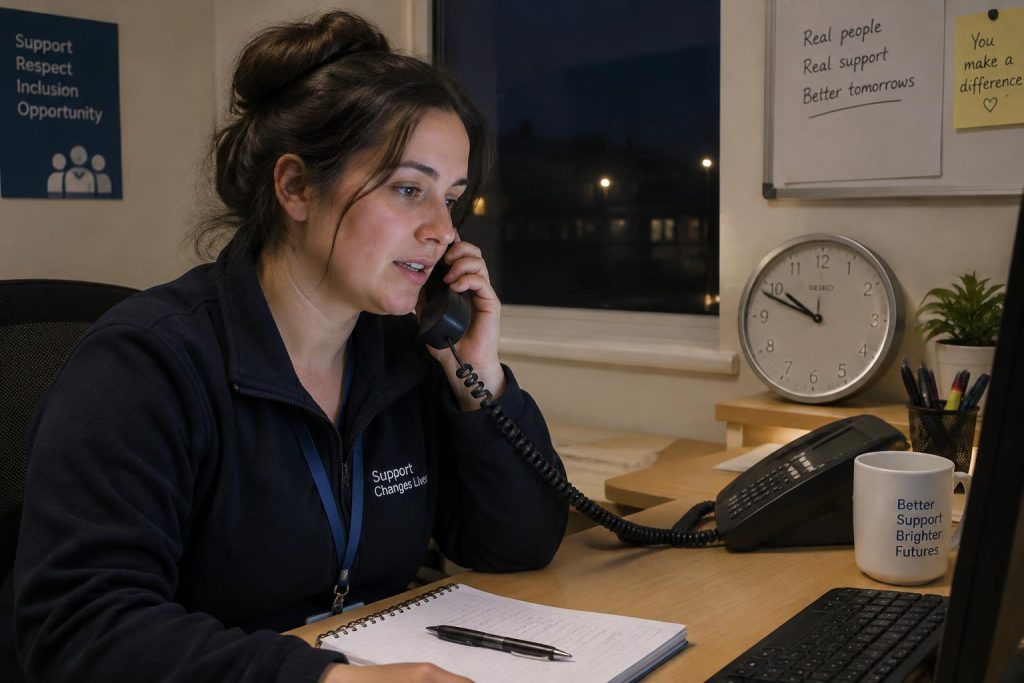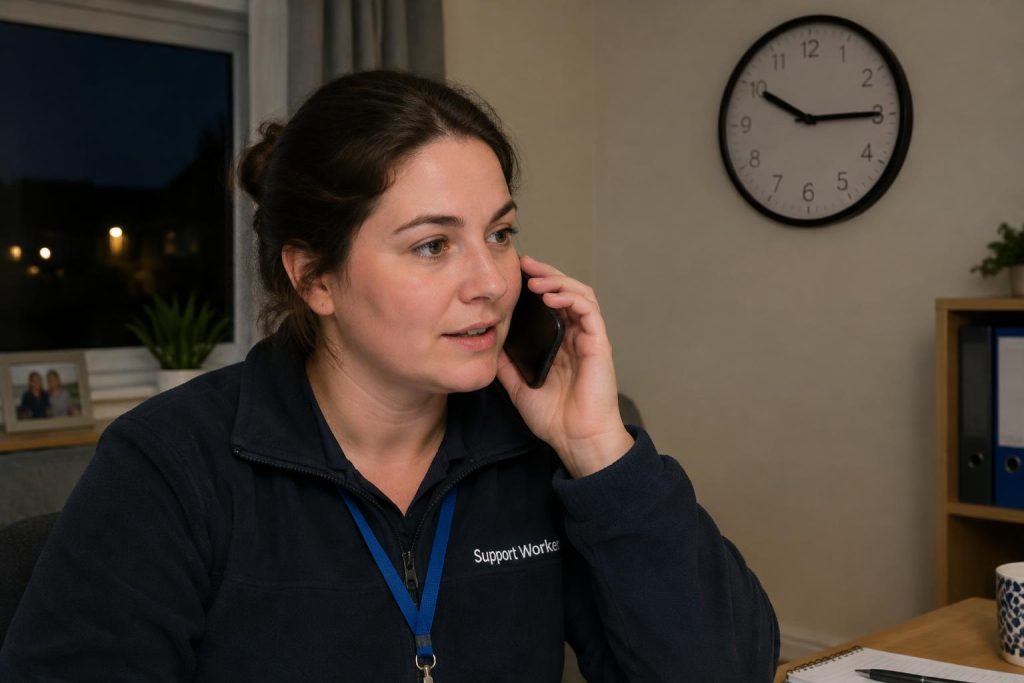
For National Disability Insurance Scheme (NDIS) providers, every incoming enquiry represents an opportunity to connect with someone who may need disability support services. Whether the caller is a participant exploring their options, a family member seeking assistance or a support coordinator looking for a suitable provider, the first interaction can influence what happens next.
However, not every enquiry arrives during standard business hours.
Participants and families may research disability services in the evening, contact providers over the weekend or make enquiries after discussing support arrangements with their loved ones. Support coordinators may also need to contact providers outside conventional office hours when circumstances change or time-sensitive arrangements arise.
If these calls go unanswered, the consequences can extend beyond a missed conversation.
Potential participants may contact another organisation. Families may become uncertain about a provider’s responsiveness. Referral opportunities may be delayed, and administrative teams may return to work facing unanswered messages without enough information to prioritise follow-up.
This is where a professional NDIS call answering service can make a meaningful difference.
Rather than relying exclusively on voicemail, an organised after-hours answering arrangement helps disability providers acknowledge incoming enquiries, collect relevant information, identify urgent situations and ensure messages reach the appropriate team members.
At After Hours Response, we understand that effective communication is an essential part of running a responsive NDIS organisation. Our after-hours operational support services help disability providers manage calls outside normal business hours, coordinate appropriate escalation and maintain communication continuity.
By combining professional call handling with structured documentation and next-business-day handovers, After Hours Response can help providers develop a more reliable approach to managing incoming calls, including potential participant and referral enquiries where these workflows form part of the agreed service arrangements.
In this guide, we explore how missed calls can affect NDIS business growth, what a reliable NDIS phone answering service should include, how to distinguish urgent operational issues from general enquiries and how providers can build a more effective referral follow-up process.
1. Why After-Hours Communication Matters for NDIS Providers
The disability services sector operates in an environment where participant needs do not always align with ordinary office hours.
Many NDIS providers deliver services early in the morning, late in the evening, overnight and across weekends. Supported Independent Living (SIL) arrangements, personal care assistance, community participation and other disability supports may involve staff working at times when administrative offices are closed.
While service delivery continues, the people responsible for answering general enquiries, managing referrals and coordinating new participant intake may only be available during standard business hours.
This creates a communication gap.
A participant may call at 7:30 pm to ask whether a provider offers assistance with daily living. A parent may telephone on Sunday to enquire about supported accommodation. A support coordinator may leave a message requesting information about service availability.
Without an organised answering process, these enquiries may remain unattended until the next business day.
Participants and families often make decisions outside office hours
People do not necessarily search for disability services between 9 am and 5 pm.
A family member who works full-time may only have the opportunity to research NDIS providers after dinner. A participant may prefer to make enquiries when a trusted support person is available. Families considering a change of provider may spend weekends comparing services and discussing their options.
These are normal circumstances that can influence when enquiries occur.
If a provider only offers telephone contact during office hours, some potential participants may experience difficulties making an initial connection.
An NDIS after-hours answering service provides an additional point of contact, allowing callers to speak with someone rather than relying entirely on voicemail.
The objective is not to pressure people into making decisions immediately. It is to acknowledge their enquiry, collect appropriate details and establish a clear pathway for follow-up.
Support coordinators may need timely communication
Support coordinators frequently assist participants with identifying suitable services, contacting providers and arranging supports that align with individual goals and circumstances.
When making enquiries, they may need information about:
-
Services offered by a provider.
-
Geographic areas covered.
-
Potential service availability.
-
Referral and intake procedures.
-
Appropriate contact people.
-
Required documentation.
-
Expected follow-up arrangements.
An unanswered call does not automatically mean a referral will be lost. However, repeated communication difficulties can create additional work and uncertainty for the person coordinating support.
After Hours Response can help NDIS organisations maintain a more consistent communication process outside standard operating hours, supporting the transfer of relevant information to daytime teams.
2. The Hidden Business Impact of Missed NDIS Enquiries
A missed telephone call may appear insignificant when considered individually.
For a busy disability provider, however, a pattern of unanswered calls can create operational inefficiencies and missed opportunities to engage with potential participants.
The impact is not limited to the immediate enquiry.
Lost opportunities to connect with potential participants
When someone contacts an NDIS provider for the first time, they may be comparing several organisations.
They might want to know whether a provider delivers services in their area, has experience supporting particular needs or can explain the next steps in accessing services.
If the call is unanswered, the caller may leave a message. Alternatively, they may contact another provider that is easier to reach.
There is no guarantee that every unanswered enquiry results in lost business. Nevertheless, making initial contact easier can reduce unnecessary barriers for people seeking support.
An NDIS call answering service helps providers create a reliable first point of contact, even when their internal intake team is unavailable.
Reduced confidence among families and carers
Choosing a disability support provider can be an important decision.
Families may be considering personal care arrangements, community access, supported accommodation or services involving ongoing assistance.
They often want to understand how a provider communicates and what happens when they need assistance.
A consistently unanswered telephone can create uncertainty, particularly when callers are unfamiliar with the organisation.
By contrast, a courteous and professional response can demonstrate that the provider has considered how incoming communication will be managed.
This does not replace the importance of service quality, qualified staff or appropriate safeguards. It does, however, contribute to the overall experience of contacting the organisation.
Delays in referral follow-up
Not all missed enquiries are immediately lost.
Some callers leave voicemail messages or send emails instead.
However, these enquiries can become difficult to manage when information is incomplete.
A message stating, “Please call me about NDIS support”, may not identify the service required, the caller’s relationship to the participant or the urgency of the enquiry.
Daytime employees may need to make several attempts to obtain the necessary information.
A structured after-hours call handling process can help reduce this administrative burden by recording essential details during the initial conversation.
Increased pressure on administrative teams
NDIS administrative teams often manage several responsibilities simultaneously.
These may include scheduling, staff coordination, participant communication, service agreements, documentation and referral enquiries.
When after-hours calls accumulate without adequate information, employees may begin their working day responding to incomplete messages.
This can interrupt planned tasks and make it difficult to determine which enquiries require attention first.
After Hours Response helps disability providers establish clearer after-hours communication and handover arrangements, supporting more organised follow-up when the regular team returns.
3. What Is an NDIS Call Answering Service?
An NDIS call answering service is a telephone support arrangement designed to help disability service providers manage incoming calls when their usual team is unavailable.
Depending on the provider’s requirements and agreed service scope, this may involve answering calls, documenting messages, identifying the reason for contact, applying escalation instructions and forwarding information to authorised personnel.
A general telephone answering service may simply record a caller’s name and telephone number.
NDIS providers often require a more structured approach because calls can involve different levels of urgency, sensitive participant information and operational responsibilities.
For example, the same telephone line may receive:
-
An enquiry about becoming a new participant.
-
A request from a support coordinator for service information.
-
A family member seeking an update.
-
A support worker reporting an unexpected roster gap.
-
An incident requiring escalation.
-
A concern about a participant’s wellbeing.
-
A routine administrative question.
These calls should not all be handled in the same way.
An effective NDIS answering arrangement needs a clear process for recognising the nature of each call and determining the appropriate response.
How After Hours Response can help
After Hours Response provides after-hours operational support for NDIS providers, including call handling, incident and emergency escalation, roster-related coordination and structured handovers.
Our service is designed to complement a provider’s existing operations rather than replace its internal management team.
For organisations seeking to improve enquiry management, we can discuss how relevant call categories, message collection procedures and handover requirements can be incorporated into their agreed after-hours arrangements.
This allows providers to explore an approach that supports both operational responsiveness and the management of incoming enquiries.
Importantly, the provider remains responsible for determining service suitability, confirming availability, completing participant intake and making decisions about accepting referrals.
4. Why Voicemail Alone May Not Be Enough
Voicemail remains a useful communication tool, but it has limitations.
A caller must be willing to leave a message, provide sufficient information and wait for someone to respond.
Some callers may not feel comfortable recording a detailed message. Others may forget to provide their telephone number, speak unclearly or end the call without leaving anything.
For people seeking disability supports, these barriers can make communication more difficult.
Common limitations of voicemail
Incomplete information: A message may contain a name and telephone number but no explanation of the support required.
Unclear urgency: An employee listening to a recording may be unable to determine whether a matter needs immediate attention.
No opportunity for clarification: A voicemail system cannot ask a follow-up question when the caller provides insufficient information.
Uncertainty about next steps: The caller may not know when someone will respond.
Additional administrative work: Employees may need to listen to recordings, transcribe details and attempt multiple return calls.
A professional answering arrangement can address some of these limitations through a live conversation and a consistent information collection process.
A better first-contact experience
Consider two hypothetical scenarios.
In the first, a parent contacts an NDIS provider on Saturday afternoon to enquire about assistance with daily living. The call goes to voicemail, and the parent decides not to leave a message.
In the second, the call is answered by a trained representative who identifies the organisation, listens to the enquiry, records the required details and explains the agreed follow-up process.
The second scenario does not guarantee that the caller will become a participant.
However, it creates an opportunity for the provider to receive a more complete enquiry and respond appropriately.
For growth-focused NDIS organisations, this difference can be valuable.
5. Professional Enquiry Handling: Creating a Positive First Impression
The first conversation with a potential participant or family member should be respectful, professional and easy to understand.
People contacting disability providers may have different communication preferences, levels of familiarity with the NDIS and reasons for seeking support.
A professional NDIS phone answering service should recognise these differences.
Answer calls clearly and consistently
A caller should be able to identify which organisation they have reached.
An agreed greeting helps establish consistency and reduces confusion.
For example:
“Thank you for calling [Provider Name]. You’re speaking with our after-hours support team. How can I help you?”
The wording should reflect the provider’s preferred communication style and accurately describe the role of the answering team.
Listen before collecting information
An effective enquiry process begins by understanding why the person is calling.
Some callers may know exactly which service they need.
Others may be uncertain about the available options or how NDIS funding relates to their circumstances.
The answering representative should allow the caller to explain their enquiry before asking structured questions.
This can help avoid unnecessary repetition and make the interaction feel less transactional.
Use accessible communication
Disability providers should consider the accessibility of their communication arrangements.
Useful practices may include speaking clearly, avoiding unnecessary jargon, allowing additional time for responses and respecting a caller’s preferred communication method.
Where a caller requires an alternative communication arrangement, the answering team should record the request and pass it to the appropriate staff member.
The objective is not to make assumptions about a person’s disability or support needs.
It is to communicate respectfully and identify practical ways to support effective contact.
Avoid making promises about service availability
An after-hours representative should not promise that a provider can accept a participant unless they have explicit authority and reliable information to make that commitment.
Service suitability may depend on location, staffing, support requirements, funding arrangements and other considerations.
A more appropriate response is to acknowledge the enquiry and explain that the intake team will review the information.
After Hours Response can help providers establish communication procedures that distinguish between information an after-hours team may provide and decisions that must remain with authorised internal employees.
6. What Information Should Be Collected During an After-Hours NDIS Enquiry?
One of the most useful functions of an NDIS call answering service is collecting essential information in a consistent format.
A well-designed enquiry record can help the daytime intake team understand who called, why they contacted the organisation and what follow-up is required.
However, information collection should remain proportionate.
The answering team should only request information that is necessary for the agreed purpose, and sensitive details should be handled in accordance with the provider’s privacy and security procedures.
Essential intake enquiry information
|
Information |
Why it may be useful |
|---|---|
|
Caller’s name |
Identifies the person making contact |
|
Contact number |
Enables appropriate follow-up |
|
Email address, if preferred |
Supports alternative communication |
|
Relationship to participant |
Clarifies whether the caller is a participant, family member, nominee or other contact |
|
General service requested |
Helps route the enquiry |
|
Suburb or service area |
Assists with geographic suitability |
|
Preferred contact time |
Helps the intake team plan follow-up |
|
General reason for enquiry |
Provides context |
|
Urgency |
Helps prioritise the response |
|
Consent and contact preferences |
Supports appropriate handling of personal information |
The information collected should be tailored to the type of enquiry.
For example, a support coordinator making a general availability enquiry may not need to disclose detailed participant information during the initial call.
Questions that can improve enquiry quality
Depending on the circumstances, suitable questions may include:
“What type of disability support are you looking for?”
“Which suburb or area would the support be required in?”
“Are you enquiring for yourself or on behalf of someone else?”
“Is there a preferred time for our intake team to contact you?”
“Is there a particular timeframe you would like us to be aware of?”
These questions can help establish the next step without turning an initial conversation into a full intake assessment.
What should generally wait until formal intake?
Detailed clinical information, sensitive disability history, full NDIS plan documents and comprehensive support assessments are not normally necessary for a routine first-contact telephone message.
Providers should establish clear boundaries around what the after-hours team is authorised to collect.
Where additional information is needed, the caller can be directed to an approved intake process.
After Hours Response can work with providers to define the relevant call documentation and handover requirements within the agreed service arrangement.
7. Distinguishing Urgent Calls From General NDIS Enquiries
A critical difference between a basic answering service and an NDIS-focused operational support arrangement is the need to recognise when a call requires escalation.
Not every after-hours call should be treated as urgent.
At the same time, an incident or immediate safety concern should not be placed in an ordinary referral queue.
Providers need clear call classification and escalation procedures.
General enquiries
General enquiries typically relate to information that can be addressed during normal business hours.
Examples include:
-
A prospective participant asking about available services.
-
A family member requesting information about the intake process.
-
A support coordinator enquiring about referral procedures.
-
A caller asking which areas the provider services.
-
A request for a callback from an intake coordinator.
These enquiries can usually be documented and forwarded to the appropriate daytime team.
Time-sensitive operational matters
Some calls require more prompt attention because they may affect scheduled support or service continuity.
Examples include a support worker being unexpectedly unavailable, a roster gap affecting essential assistance or a significant change in an existing participant’s support arrangements.
These matters may require escalation to a designated on-call manager or operational contact.
Incidents and safety concerns
Calls involving immediate risks to participant safety require a different response.
Examples may include serious injury, suspected abuse, a participant who cannot be located or other circumstances involving an immediate threat to health or safety.
Where there is an immediate threat to life or a medical emergency, emergency services should be contacted on 000.
An after-hours answering arrangement must not delay emergency assistance or substitute for appropriate emergency response procedures.
NDIS providers must also maintain their own incident management, safeguarding, reporting and clinical governance responsibilities.
After Hours Response and escalation management
After Hours Response supports NDIS providers with after-hours operational call handling and escalation arrangements.
By following agreed instructions and communicating with designated contacts, our team can help providers establish a clearer process for handling different categories of incoming calls.
This is particularly useful for organisations that receive a combination of routine enquiries, roster-related calls and urgent operational matters.
8. Building an Effective After-Hours NDIS Referral Management Workflow
Capturing an enquiry is only the first stage.
To turn an initial contact into a meaningful opportunity to assist a participant, the provider needs a reliable follow-up process.
An NDIS referral management workflow should connect the after-hours answering team with the employees responsible for assessing enquiries and coordinating intake.
Step 1: Receive and categorise the enquiry
The initial call should be classified according to the provider’s agreed categories.
For example:
-
New participant enquiry.
-
Support coordinator referral.
-
Existing participant enquiry.
-
Family or carer communication.
-
Administrative request.
-
Urgent operational matter.
Categorisation helps ensure that information reaches the appropriate team.
Step 2: Collect the essential details
The answering representative records the information required for the relevant call category.
For a new participant enquiry, this may include contact details, the general type of support requested and the preferred follow-up method.
For a referral enquiry, the caller may be asked to identify their organisation and the purpose of the referral.
Step 3: Confirm the next action
The caller should receive an accurate explanation of what will happen next.
For example, they may be advised that their message will be passed to the intake team for review during the next business day.
Providers should avoid promising a particular callback time unless the arrangement can reasonably be met.
Step 4: Transfer the information securely
Enquiry records should be transmitted through approved communication systems.
The provider should determine who is authorised to receive different types of information and how records are stored.
This is particularly important where a call contains participant-related or other personal information.
Step 5: Assign the enquiry to an internal team member
When the intake team returns, each enquiry should have a clear owner.
Without ownership, messages may be overlooked or handled by multiple employees.
A centralised process can reduce confusion and support accountability.
Step 6: Contact the caller
The responsible employee should review the information and contact the caller through their preferred communication method where practical.
During this conversation, the provider can clarify support requirements, discuss services and explain the formal intake process.
Step 7: Record the outcome
The provider should document whether the enquiry progressed, requires further information, is awaiting a decision or has been closed.
This creates a clearer record of referral activity and can help identify opportunities to improve the process.
After Hours Response can support the initial call handling, documentation and handover stages within the agreed scope, helping providers connect after-hours communication with their existing daytime intake procedures.
9. Integrating After-Hours Communication With Daytime Intake Teams
An after-hours answering service is most effective when it operates as an extension of a provider’s communication workflow.
If information is collected overnight but cannot be accessed or understood by the intake team, much of the potential benefit is lost.
Integration does not necessarily require complicated technology.
It begins with clear procedures and responsibilities.
Establish consistent enquiry categories
The after-hours team and daytime employees should use compatible categories.
For example, a call classified as a new participant enquiry should be easy for the intake team to identify and prioritise.
Consistent terminology reduces the need to interpret incomplete or ambiguous messages.
Agree on handover requirements
A useful handover should provide enough information for the receiving employee to determine the next action.
Depending on the provider’s arrangements, this may include the caller’s contact details, reason for calling, urgency classification, actions already taken and required follow-up.
The format should be consistent and easy to review.
Identify the appropriate recipients
Different calls may need to reach different people.
A new participant enquiry may belong with the intake coordinator.
A staffing concern may need to reach the rostering team.
A clinical matter may require escalation through the provider’s authorised clinical pathway.
After Hours Response can help providers establish these communication pathways so incoming information is directed according to agreed instructions.
Create a next-business-day review routine
A short review at the beginning of each business day can help employees identify outstanding matters.
The intake team can examine new enquiries, confirm ownership and prioritise callbacks.
Operational managers can review escalated issues and any actions requiring further attention.
This helps reduce the risk of after-hours messages becoming disconnected from ordinary business processes.
Maintain a clear record of actions
A useful call record should distinguish between information received and actions completed.
For example, “Caller requested information about SIL” is different from “Service availability confirmed”.
Clear documentation helps prevent misunderstandings and supports accurate follow-up.
10. How an NDIS Call Answering Service Can Support Business Growth
Business growth in the NDIS sector should be grounded in quality service delivery, participant choice, appropriate staffing and sustainable operations.
An NDIS call answering service does not replace these foundations.
However, it can help remove communication barriers that may prevent prospective participants from making initial contact.
Making the organisation easier to reach
A provider may invest in search engine optimisation, digital advertising, referral relationships and community engagement.
These activities can generate interest, but potential participants still need a practical way to contact the organisation.
If enquiries consistently arrive outside business hours, an answering arrangement may help ensure that more callers have an opportunity to speak with someone.
Improving the quality of referral information
A structured conversation can produce a more useful enquiry record than an incomplete voicemail.
This may allow intake employees to prepare for the next conversation and reduce the need to ask callers to repeat basic information.
Supporting referral relationships
Support coordinators and other referral contacts often value clear communication.
A provider that acknowledges enquiries and follows up consistently may be easier to work with.
The answering service contributes to this process by helping ensure that initial messages are captured and routed appropriately.
Supporting growth without expanding the entire internal roster
Maintaining a dedicated internal telephone team outside normal business hours may be difficult for some organisations.
Recruitment, training, supervision, scheduling and leave coverage all create operational requirements.
An outsourced answering arrangement may provide an alternative to extending internal administrative coverage across evenings and weekends.
The most suitable model depends on call volume, service complexity, escalation needs and budget.
After Hours Response helps NDIS providers explore an after-hours operational support model that complements their existing staffing arrangements.
11. The Role of After-Hours Answering in Different NDIS Service Areas
Not every NDIS provider receives the same types of calls.
A provider specialising in community participation may receive different enquiries from an organisation delivering SIL or complex personal care.
This is why a generic telephone script is rarely sufficient for every disability service.
Supported Independent Living providers
SIL providers may receive calls from families and support coordinators exploring supported living arrangements.
Initial enquiries may involve location, the type of living environment, support arrangements and the process for determining suitability.
Existing SIL services may also generate operational calls involving staff availability, incidents and participant wellbeing.
A structured after-hours process can help distinguish prospective participant enquiries from matters affecting current service delivery.
In-home disability support providers
Organisations delivering personal care and assistance with daily living may receive enquiries from participants seeking support at home.
Callers may ask about service areas, the types of assistance available and how to arrange an assessment.
After-hours call handling can help capture these enquiries and pass them to the appropriate intake staff.
Community participation providers
Participants and families may enquire about social activities, community access or assistance attending appointments and events.
A professional answering process can record the type of support requested and arrange follow-up without making assumptions about service suitability.
Providers delivering complex or high-intensity supports
These organisations may need more detailed escalation procedures for existing participant-related calls.
An enquiry about becoming a new participant should remain separate from a clinical concern requiring timely assessment.
After Hours Response can assist with agreed operational escalation arrangements, including access to Registered Nurse on-call escalation pathways where included in the service arrangement.
Clinical escalation must follow appropriate governance procedures and must not replace emergency medical intervention.
12. Improving the Participant Experience From the First Telephone Call
The first telephone interaction is part of the broader participant experience.
Although the caller may not yet be receiving services, the way an organisation communicates can influence their understanding of its processes.
Respect participant choice
NDIS participants have the right to make informed decisions about their supports.
An answering representative should not pressure callers to select a provider or suggest that a particular organisation is their only option.
The purpose of the initial conversation is to understand the enquiry and facilitate appropriate follow-up.
Avoid unnecessary assumptions
Not every caller will be familiar with NDIS terminology.
Some people may use everyday descriptions rather than formal support categories.
For example, someone may ask for “help around the house” rather than refer to a particular funded support.
A respectful answering process should focus on understanding the caller’s request rather than expecting them to use technical language.
Support different communication preferences
Some callers may prefer email communication. Others may need additional time during telephone conversations.
Where practical, these preferences should be recorded and passed to the intake team.
Explain the limits of the answering service
Transparency is important.
Callers should understand whether they are speaking with an after-hours representative and whether that person can resolve the enquiry immediately.
An accurate explanation of the next steps is more useful than an unrealistic promise.
After Hours Response supports NDIS providers in maintaining professional and structured after-hours communication, helping organisations create a more consistent first-contact experience.
13. Privacy and Confidentiality in NDIS Enquiry Management
NDIS providers may receive personal and sensitive information during telephone conversations.
Even an initial enquiry can involve details about disability, health, family circumstances or support arrangements.
For this reason, privacy must be considered when establishing an NDIS call answering service.
Collect only necessary information
The answering team should avoid requesting detailed personal information that is not required for the immediate purpose.
A general enquiry about service availability may only require contact details, the service requested and the relevant location.
More detailed assessments should take place through the provider’s authorised intake process.
Use approved communication channels
Call records should be transferred and stored through systems approved by the provider and appropriate to the information involved.
Access should be restricted to authorised personnel.
Establish clear retention and access arrangements
Providers should understand how their answering service handles records, who can access them and what arrangements apply to retention and deletion.
These matters should be addressed when establishing the service agreement.
Respect authority and consent
Where a person calls on behalf of a participant, the answering team should avoid disclosing confidential participant information without appropriate authority.
Recording an enquiry is not the same as confirming that a caller is authorised to receive information about an existing participant.
Maintain appropriate governance
NDIS providers should consider their obligations under applicable privacy legislation, the NDIS Code of Conduct and relevant NDIS Practice Standards.
The exact requirements will depend on the organisation, its activities and the information involved.
After Hours Response can discuss how call documentation, escalation and handover processes fit within a provider’s established operational and information-handling procedures.
14. Measuring the Effectiveness of an NDIS Call Answering Service
Providers considering an after-hours answering arrangement should think about how they will evaluate its usefulness.
The objective should not simply be to answer as many calls as possible.
Call quality, appropriate escalation, accurate information and effective follow-up are equally important.
Useful performance measures include:
Call answer rate: The proportion of incoming calls answered by the relevant team or service.
Enquiry capture rate: The number of relevant enquiries documented with sufficient information for follow-up.
Follow-up completion rate: The percentage of recorded enquiries that receive the required follow-up.
Time to first response: How long it takes the internal team to respond after receiving an enquiry.
Referral progression: The number of enquiries that progress to assessment, service discussions or formal intake.
Escalation accuracy: Whether calls requiring urgent action were identified and handled according to the provider’s procedures.
A simple example
Suppose an NDIS provider records 40 after-hours new participant enquiries in one month.
If its intake team successfully follows up 36 of those enquiries, its follow-up completion rate is:
36 ÷ 40 × 100 = 90%.
The remaining four enquiries can be reviewed to understand whether further contact attempts, updated information or workflow changes are needed.
This does not establish how many participants the provider will acquire.
However, it gives management a practical way to evaluate whether enquiries are being managed consistently.
After Hours Response can support the initial documentation and handover components of this process within the agreed service scope.
15. The Financial Considerations of Missed Enquiries
When evaluating an NDIS call answering service, providers often focus on the cost of the service.
Cost is important, but it should be considered alongside operational requirements and the potential value of improved communication.
A provider may incur costs through missed calls, repeated callbacks, administrative inefficiencies and the need for internal after-hours coverage.
These costs are not always easy to measure.
Consider the cost of internal coverage
Maintaining an internal answering arrangement may involve:
-
Employee wages and applicable employment costs.
-
After-hours rostering.
-
Staff training.
-
Supervision and quality assurance.
-
Leave and absence coverage.
-
Communication technology.
-
Escalation management.
An outsourced service may reduce some of these requirements, although the actual financial benefit depends on the provider’s circumstances and the commercial arrangement.
Consider the value of administrative efficiency
If an answering service collects essential information during the first call, the intake team may spend less time clarifying basic details.
This can free employees to focus on assessments, service coordination and participant communication.
Avoid treating every enquiry as guaranteed revenue
Not every caller will become a participant.
Some enquiries may be outside the provider’s service area. Others may involve supports the organisation does not deliver.
A participant may choose another provider or decide not to proceed.
For this reason, providers should not calculate the value of an answering service by assuming that every captured enquiry becomes a new service agreement.
A more useful assessment considers enquiry quality, follow-up efficiency, communication continuity and the overall cost of maintaining appropriate after-hours coverage.
16. Why NDIS Providers Should Avoid Using a Generic Call Centre Without Clear Procedures
A general call centre may be suitable for some basic telephone tasks.
However, NDIS providers should assess whether the arrangement can accommodate their operational requirements.
Disability services can involve sensitive information, participant-specific instructions and urgent situations that require escalation.
Understanding different call types
A representative should know how to distinguish a routine enquiry from a call requiring operational attention.
Without clear procedures, important information may be treated as an ordinary message.
Following provider-specific instructions
Different organisations have different staffing arrangements, escalation contacts and service models.
A suitable answering arrangement should reflect these differences rather than relying on a single generic script.
Documenting actions accurately
The provider needs to understand what occurred during the call, what information was collected and whether any action was taken.
Maintaining appropriate escalation boundaries
An answering representative should not independently make clinical, safeguarding or service eligibility decisions outside their authority.
Clear boundaries protect both the provider and the people seeking assistance.
How After Hours Response differs in its focus
After Hours Response is focused on supporting NDIS providers with after-hours operational communication.
Our services extend beyond simply taking a telephone message and can include agreed incident escalation, roster-related coordination and structured next-business-day handovers.
This operational focus is particularly relevant for providers that need to manage both routine incoming calls and matters affecting existing services.
For organisations interested in improving new participant enquiry handling, we can discuss how the relevant communication procedures could fit within their after-hours support arrangements.
17. Creating an After-Hours Enquiry Script for Your NDIS Organisation
A well-designed script helps ensure that callers receive a consistent response.
However, it should remain flexible enough to accommodate individual circumstances.
A script should guide the conversation rather than prevent the representative from listening.
Example: New participant enquiry
Greeting
“Thank you for calling [Provider Name]. You’re speaking with the after-hours support team. How can I assist you?”
Identify the enquiry
“Are you calling about services for yourself or someone you support?”
Clarify the service
“Could you tell me a little about the type of support you’re looking for?”
Collect contact details
“May I take your name and preferred contact details so our intake team can follow up?”
Identify location
“Which suburb or area would the support be required in?”
Confirm preferences
“Is there a preferred time or method for someone to contact you?”
Explain next steps
“Thank you for providing that information. I’ll pass your enquiry to our intake team for review during business hours.”
This is an illustrative script. Providers should adapt it to their own communication policies, privacy procedures and service arrangements.
Example: Support coordinator referral
A support coordinator may require a slightly different process.
The answering representative may ask for the caller’s name, organisation, contact details, general service requested and relevant service area.
Detailed participant records should not be collected unnecessarily during an initial availability enquiry.
The representative can then explain how the provider’s referral team will follow up.
Example: Existing participant operational concern
Where a caller reports an issue affecting an existing participant, the answering team should follow the provider’s approved operational or emergency procedures rather than applying the new participant enquiry script.
After Hours Response can help providers establish appropriate call categories and communication instructions as part of their agreed after-hours arrangements.
18. Common Mistakes NDIS Providers Make With After-Hours Enquiries
Even organisations with experienced administrative teams can encounter difficulties managing enquiries outside office hours.
Recognising common problems is an important step towards improving the process.
Mistake 1: Assuming every caller will leave voicemail
Some callers leave detailed messages, while others do not.
Providers should consider whether voicemail alone meets the communication needs of their audience.
Mistake 2: Treating all calls as equally urgent
A general enquiry about service availability should not automatically trigger an emergency escalation.
Likewise, a serious safety concern should not wait in an ordinary administrative queue.
Clear call classification is essential.
Mistake 3: Collecting too little information
An incomplete message may require several follow-up attempts.
A structured enquiry template can help reduce avoidable gaps.
Mistake 4: Collecting too much sensitive information
A first-contact enquiry is not necessarily the appropriate time for a comprehensive participant assessment.
Information collection should remain necessary, proportionate and authorised.
Mistake 5: Failing to assign follow-up responsibility
An enquiry can be answered and documented but still remain unresolved if no employee is responsible for the next action.
Clear ownership is important.
Mistake 6: Promising immediate service availability
An answering representative should not confirm acceptance, staffing or service commencement without appropriate authority.
Mistake 7: Not reviewing communication performance
Providers may continue using the same process for years without assessing whether enquiries are being captured and followed up effectively.
Regular review can reveal opportunities for improvement.
After Hours Response can help providers strengthen the after-hours stages of their communication process through structured call handling, escalation and handover arrangements.
19. How to Choose the Right NDIS Call Answering Service
Choosing an after-hours answering arrangement should involve more than comparing telephone coverage hours.
Providers should evaluate whether the service aligns with their operating model, communication requirements and responsibilities.
Does the service understand NDIS operations?
An answering service supporting disability providers should be able to work with clearly defined call categories, operational procedures and escalation instructions.
Can it manage different levels of urgency?
Ask how the service distinguishes routine enquiries from operational incidents and emergency situations.
How are messages documented?
Understand what information is recorded and how it reaches your employees.
Can the service follow your organisation’s procedures?
The arrangement should reflect your escalation contacts, communication preferences and authorised actions.
What happens after a call is answered?
Clarify whether the service only takes a message or can also carry out agreed operational actions.
How are sensitive records handled?
Ask about privacy, information security, authorised access and record handling.
How does the service connect with your intake team?
A clear handover process is essential if you want new participant enquiries to receive appropriate follow-up.
Is the service suitable for your organisation’s size?
A smaller provider may require a straightforward answering and escalation arrangement.
A larger organisation may need different pathways for multiple service areas, locations or operational teams.
After Hours Response works with NDIS providers seeking structured after-hours operational support. We can discuss your existing communication arrangements, the types of calls your organisation receives and the requirements that need to be considered when establishing an appropriate service.
20. How to Prepare Your NDIS Business for an After-Hours Answering Service
Before introducing a new answering arrangement, providers should review their existing processes.
Preparation helps ensure that the service operates consistently from the beginning.
Identify the types of calls you receive
Review common after-hours communication needs.
These may include new participant enquiries, support coordinator referrals, existing participant calls, roster gaps and incidents.
Define which calls require immediate action
Establish written instructions for urgent matters, including who should be contacted and when emergency services are required.
Prepare an enquiry collection template
Identify the minimum information required for each routine call category.
Confirm escalation contacts
Maintain accurate contact details for authorised employees and ensure there are suitable backup arrangements.
Establish handover responsibilities
Decide who will receive new participant enquiries and who will review outstanding messages.
Inform internal employees
Administrative teams, support coordinators and operational managers should understand how the after-hours arrangement works.
Review and refine the process
Once the service is operating, review call records and feedback to identify improvements.
After Hours Response can help providers discuss these operational requirements when considering an after-hours support arrangement.
21. Why Consistent Communication Supports Long-Term Referral Relationships
Referral relationships are built over time.
Support coordinators, participants, families and other stakeholders may interact with a provider on multiple occasions before a service arrangement begins.
Each interaction contributes to their experience.
An NDIS call answering service can support these relationships by creating a more consistent process for receiving enquiries.
However, the answering service is only one part of the broader communication system.
The internal team must still provide accurate information, follow up appropriately and deliver services that meet participant needs.
Reliability matters more than unrealistic promises
A provider does not need to guarantee immediate availability for every requested service.
It does need to communicate clearly about what happens next.
A realistic callback arrangement is generally more useful than an assurance that cannot be fulfilled.
Good records support continuity
When enquiry information is documented accurately, the next employee can continue the conversation with better context.
This can reduce repetition and improve the caller’s experience.
Consistency can support professional relationships
Support coordinators may contact the same provider about different participants over time.
A predictable enquiry process can make communication easier and reduce administrative uncertainty.
After Hours Response helps providers maintain continuity outside standard business hours through agreed call handling and handover arrangements.
22. Supporting Sustainable NDIS Business Growth With After Hours Response
Growth creates opportunities, but it also increases operational demands.
As an NDIS provider expands its participant base, workforce or service areas, incoming communication may become more complex.
The organisation may receive more calls from support workers, participants, families, coordinators and prospective clients.
Without a structured process, this can place additional pressure on internal employees.
After Hours Response helps NDIS providers manage after-hours operational communication through services designed to complement their existing teams.
Our support can include:
-
24/7 after-hours operational coverage: Helping providers maintain a contact point outside ordinary office hours.
-
Call handling and documentation: Recording relevant information and supporting appropriate communication pathways.
-
Incident and emergency escalation: Following agreed procedures for matters requiring further attention.
-
Roster-related coordination: Assisting with agreed processes when staffing issues arise outside business hours.
-
Registered Nurse on-call escalation pathways: Supporting appropriate clinical escalation arrangements where included in the agreed service.
-
Next-business-day handovers: Helping internal teams understand what occurred and what follow-up may be required.
For providers focused on attracting new participants and maintaining referral relationships, a professional answering arrangement can also support more organised management of incoming enquiries.
The exact handling of prospective participant enquiries, intake information and referral-related calls should be confirmed as part of the agreed service scope.
Our goal is to help NDIS providers maintain clearer after-hours communication while their internal teams focus on delivering and coordinating quality disability supports.
Contact After Hours Response – Improve Your NDIS After-Hours Communication
Are you concerned that unanswered evening and weekend calls may be affecting your NDIS organisation’s responsiveness?
Do you want to establish clearer procedures for managing incoming enquiries, operational issues and urgent after-hours calls?
After Hours Response can help.
We work with NDIS providers seeking reliable after-hours operational support, helping them establish clearer communication pathways, escalation procedures and handover arrangements.
Contact After Hours Response to discuss how our services can complement your existing team and how enquiry-related call handling requirements may be incorporated into your agreed support arrangements.